A Book by Jim Urban

Reinvent.
On Two Wheels.

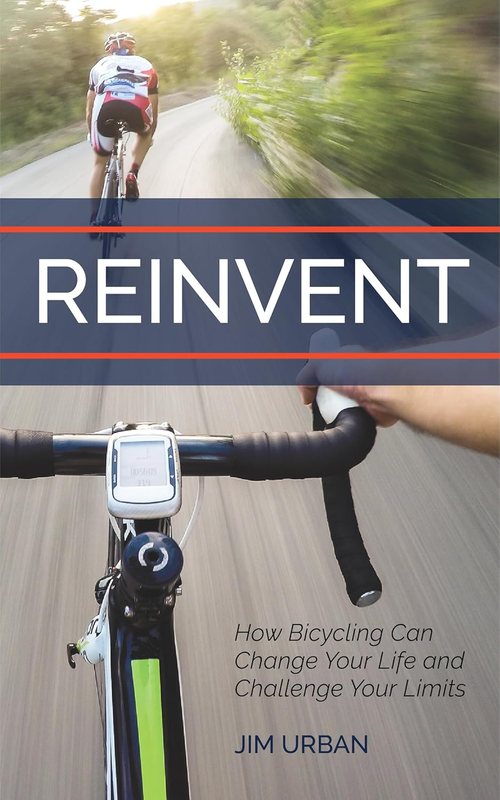
How bicycling can change your life and challenge your limits. Ten lessons from the saddle on getting in your best shape ever, finding your buddies for life, and starting every day with a Smart Start Morning Ritual.

10
Life Lessons
1
Big Idea
Possibilities
Reinvent book cover by Jim Urban
Jim Urban
CO
Colorado Native
About the Author

The Realtor who rides at 4:25 a.m.

Jim Urban is a Colorado native, a top REALTOR® in the Denver metro area, and the kind of cyclist who believes a long climb up a mountain pass is not so different from the various stages of a real estate transaction.

Hard-working determination. The drive to get over any obstacle. The willingness to see something through the final mile. Those are the lessons Jim has taken from years of riding into every part of his professional life. He is the founder of The Home Referral Team, serving Denver and the entire front range.

Reinvent is the book he wrote for anyone who has ever looked at someone in great shape and thought, “I could never be like that.” The truth, Jim says, is that anyone can get into a personal best at any age. This book is the playbook he used. It is also an invitation to use bicycling as the spark for getting fit, sharpening your mind, and building friendships that last a lifetime.

Licensed REALTOR® License ER.001096355
Founder, The Home Referral Team Lakewood, Colorado
Avid Cyclist Ride the Rockies, Triple Bypass
Author of Reinvent ISBN 978-1945733376
Inside the Book

Ten lessons that quietly rewire how you live.

Reinvent is not a training manual. It is a conversation between Jim and his interviewer Jonathan about the real, daily mechanics of getting into the best shape of your life and what changes once you do. Here is what each lesson does for you.

01 · FOUNDATION

Build a Smart Start Morning Ritual

The single highest-leverage habit in the book. Jim walks through the alarm at 4:25 a.m., the spin class, the ride. Small daily rituals that compound into a different life.

02 · MINDSET

Permission to be a fair-weather rider

Why giving yourself permission to skip the rainy day actually keeps you committed for life, and what to do with the gym on bad weather mornings.

03 · COMMUNITY

Find a buddy. Make friends for life.

Solo riding works. Riding with a buddy changes you. The unexpected payoff of training with people who care as much as you do.

04 · BODY

Eat like the body matters

Paleo, Omni, water targets, what to put on your plate. Practical eating lifestyles that support the kind of effort cycling actually requires.

05 · GRIT

Don’t let the false summit psych you out

The metaphor that runs through the whole book. What false summits teach about mountains, transactions, and life itself.

06 · PURPOSE

Plan one Big Ride a year

Ride the Rockies. Triple Bypass. International tours. The single goal that gets you out of bed every other morning of the year.

Read the Book

The Full Text. Every Lesson.

Tap any chapter to expand. The complete book is reproduced here, lesson by lesson, in Jim’s own conversational voice. Read straight through or skip to the lesson you need today.

Have you ever seen people in great shape and think, “I could never be like that”? I want you to throw out that limited way of thinking, straight out the window. The truth is that anyone can get into the best shape of his life, or her life, at any time. I want you to use this book as a natural way to inspire you to be the best version of yourself.

Becoming passionate about something is the greatest gift you can give yourself. There are hundreds of carryover benefits, some of which I will share with you in this book. Everything from creating your own Smart Start Morning Ritual to get you doing more before 9 a.m. than many people do all day, to how you can find a buddy and conquer summits you never dreamed possible.

Enjoy the book.

I hope this book inspires you to consider bicycling as a fun way to exercise, a way to make new friends, and a way to change many other aspects of life, including the way you begin your day and eat. Ultimately, you will be happier and healthier, with more clarity and drive than ever before.

I hope you get to reap the rewards through being active in a sport that is as fun and challenging as you want it to be.

To Your Reinvention. Jim Urban

Jonathan: What do people need to know to become inspired to get into their best condition ever?

Jim: For many people, it’s just a matter of not taking the time to make it a priority. Everyone can get into a personal best shape but there are a lot of obstacles to overcome. People face many distractions, such as screen time and obligations of work or family. This all equates to a perceived lack of time.

There are many other ways to get into shape besides cycling, but I think cycling is an enjoyable way that many haven’t considered. After they see what cycling has done in my life, I’m hoping to inspire people to do the same thing.

I want to inspire the readers to create time blocking for their training so they won’t let down their friends. One of the strategies shared in this book is a Smart Start Morning Ritual.

Jonathan: What will it mean to them if they reinvent themselves by bicycling?

Jim: When people make commitments to reinvent themselves, there is no upper limit on what they can achieve. As life goes on, we tend to fall into a trap of thinking that great success is for other people, those more talented then ourselves. This couldn’t be further from the truth. If people are able to reinvent themselves, the results would be more happiness; they would feel better about themselves. They would feel like they’re doing something to take care of themselves.

Besides the obvious major health benefits, cycling provides a very uplifting, childlike happy feeling. For adults, there is nothing like the feeling of the wind on your face and the blood pumping through your body like when you were a kid again.

There is also a spiritual element. When you feel good about taking care of body, your mind, and your spirit, there is a feeling of lightness that can’t be explained.

People who reinvent themselves ultimately end up with more self-fulfillment, more happiness, and more freedom. Reinventing yourself revolves around 10 Lessons that we will discuss next.

Jonathan: How can bicycling help people to create the best version of themselves, Jim? What is the first lesson in the process?

Jim: The first lesson is about clearing your mind to accept into your life a Smart Start Morning Ritual. This is about committing to yourself on a regular ritualistic routine. I find that the morning is the best time to do this. Now, a few people can commit to doing something on a regular basis later in the day, but I find as the day goes on, a lot of distractions get in the way. If you get up early enough in the morning, you’re not going to have those distractions.

If you set up an early morning Smart Start Morning Ritual, it would involve in-season and off-season training. This is a pretty serious commitment; however, at the same time, you will have the rest of the day to do your normal activities that get in the way of your training, such as work or other things.

Even though you’re making a big commitment to train, most people think that cycling seems fun without the appearance of hard physical exercise.

If you go in with that attitude, excitement, and mindset, then it becomes a lot of fun. When you actually invest in the new bicycle, if you don’t have one, it’s like the feeling of buying a new sports car. That’s the kind of feeling that I actually had when buying my first bicycle, like I was buying something really fun and cool.

In the beginning, I recommend getting used to the idea of getting up early; try to figure out a way to make that happen. Whether that is getting to bed early enough, setting your alarm for earlier, it is important to make a real commitment to yourself and your family that you will be doing this. Make a commitment to getting up earlier so you can start the day really well. Once you’ve got early rising out of the way, that will allow you enough time to get in a great work out and start your day on a positive note.

Let me share what I do for each step in the morning, just to give you an example of the power in this lesson. My alarm goes off every morning at 4:25 a.m. Now, I don’t want to scare people away in this first chapter. As a busy real estate agent, I’ve got to get up really early to get stuff done because my day starts going crazy at about 8:30 or 9:00 in the morning when the phone starts ringing and the emails hit my inbox.

I give myself about 45 minutes to get ready in the early morning, to either get on the bicycle or get to the gym, depending on if it’s off-season or in-season for outside riding. Assume that you’re now in the gym on a regular basis; getting up to get ready, drinking enough liquid, and having a small healthy start breakfast, even if it’s just eating an apple, an orange, or a banana. Get something in your system, do a spin class, or an indoor bicycling class, to start with. It’s an hour class, and I recommend doing a class as opposed to just trying to do indoor cycling on your own. You will be much more successful when other people around you can motivate you, rather than just trying to push through on your own.

You may have to work up to this step, because just getting to the first spin class might be daunting for some people. As you become more committed to the sport and become a regular, you will start to look forward to the classes.

During the week in summertime, I would also get in a thirty-mile ride. On a Saturday, it would be more like a forty or fifty-mile ride. On the weekend, you’ve got more time. That’s the Smart Start Morning Ritual. That is part of your training, and you do it because you enjoy it and you’re meeting other people while getting in shape and feeling great.

The Smart Start Morning Ritual is just committing to getting up on a regular basis, and committing to do it with other people.

Jonathan: It’s not about just riding your bicycle early in the morning; it’s about committing to something bigger than themselves, right?

Jim: It’s totally about commitment. It’s not just about the workout. It’s about eating the right foods. Getting up on a regular basis, and having a spiritual moment every morning as well. By the time you’re done with all of that, you are more ready for the day than ever before. You’re going to conquer so much more during the day. When you get into your regular routine for the rest of the day, you’re not just getting up and going to work, you are pursuing your health and passion.

Jonathan: If you’re recommending that someone have a morning ritual, should they be locked into doing everything in the morning? Let’s say if they find it better to ride bicycle at night, after work, would they also reap benefits from that?

Jim: Absolutely. I know that many people do this. I see them out riding their bicycle during the day or in the evening. I see people who are regulars in the gym at night. I just happen to be a morning regular, because I know that a person will have a much better chance of getting it done if it gets done in the morning.

If somebody can accomplish it later in the day, because they’re just absolutely not morning people or some other reason, then more power to them. I have a brother, a runner, who is definitely not a morning person. He gets his stuff done in the morning, but not early. He might be done by noon, whereas I finish by 8:30 or 9 a.m., and I’m ready to move toward my normal work in the morning.

Jonathan: Lesson two is to buy a bicycle or to find a regular spin class. What is the lesson behind trying to buy a great bicycle, or even trying to find a spin class?

Jim: In the winter, you definitely want to find an indoor cycling or a spin class that is reasonably close to you, so that you can commit to going with other riders in the class. Get to know them and get to know the instructor. They can teach you a lot of things that you wouldn’t normally learn, that you couldn’t do on your own.

I work with three different instructors during the week because there are different spin teachers in the classes. There are so many benefits in preparing yourself in the off-season. You’re not totally starting from scratch when it finally warms up, because you’ve had some winter training. There are some people who actually can train on their own in their home with their own stationary bicycle. There are lots of different options.

I would like to recommend getting involved with other people, because you will have a much better chance of succeeding once you build relationships with those people. When people want to buy a bicycle, they think, “Maybe I can buy a good one for about $1,000.” It’s possible. You might find a used bicycle that works to get you by for the first few years or more.

That might be the way to go, because I went in with that mindset, but then I ended up spending almost $4,000 on a bicycle at one of our local top bicycling shops in the Denver area. That’s daunting to a lot of people, but I would like to put this into perspective. I had that bicycle for 13 years, and it was still a good riding bicycle before it got stolen.

For 13 years, I probably rode about 45 times per year. If I just rode 35 times a year, for 13 years, that would equal 455 rides on that bicycle.

If you were to take $4,000 divided by 455, that’s $8.79 per ride; that is what I spent for that bicycle. People often panic about the cost. If they take up a sport like skiing, there are expenses for getting the skis and the lift tickets every time you go skiing, plus all the other expenses that go along with the sport. In this sport, once you get your shoes and your bicycle, you’re good to go for a long time, so it’s a relatively inexpensive sport. Getting your bicycle is usually the most expensive part of it.

When you actually spend that kind of money for something, then you do feel some obligation to actually make a go of it, because you’ve invested a fair amount of money into your bicycle. You’re also proud of your bicycle, because when you spend that kind of money, you know that you will have a lot of confidence in your bicycle because you know it is a good quality machine.

Jonathan: Finding a bicycle is like finding a compatible friend.

Jim: Yes, that’s another way of saying it. I also think that it’s almost like your new baby or your sports car. You like to baby that thing. I want to encourage you to have an open mind about the kind of bicycle you will get.

Jonathan: Let’s move on to lesson three. Your body is your focus. Can you elaborate on that?

Jim: This lesson is one of the biggest benefits that you’ll get from cycling. When you work that hard to be in good physical shape, you want to put the right foods into your body. Good nutrition and exercise go hand in hand.

There are two different diets. I prefer to call them ‘eating lifestyles’ rather than diets. One would be the paleo, since a lot of bicyclists are on the paleo diet; another version, which is very similar, is called the Omni diet.

For example, the Omni eating lifestyle teaches that 70% of what you eat needs to be whole plant foods and fruits and vegetables. Then 30% of what you eat is high-quality lean protein. Your number one liquid is water. The goal would be to drink half of your body weight in ounces of water per day. For example, I weigh 150 pounds, so it would be 75 ounces a day for me.

The other drinking options would be unsweetened almond milk or coconut milk. As opposed to drinking juices, you would just actually just eat the real fruit. On these eating lifestyles, you actually lose your desire for carbs, or carbohydrates and sugars, within one to three days; it can take up to a week if you’re a hard-core sugar addict.

Let me share with you some brief examples of what you eat for breakfast, lunch, and dinner. The first one would be breakfast. On the paleo lifestyle, you can eat up to nine eggs a week; you could make yourself a healthy smoothie. I’ve actually invented a paleo cereal, which includes non-processed dried fruits and nuts with unsweetened almond milk. Those are some options for breakfast.

For lunch, you would focus on eating veggies, like salads; depending on your weight, you would add three to six ounces of protein. For dinner, your options would be very similar to lunch, but a little more. There are a lot of paleo recipes out there. You can even do some Crock-Pot recipes that are pretty tasty. In between the meals, healthy snacks would be more nuts and berries and things like that. The healthy desserts would be something like 72% or greater dark chocolate, along with more nuts and berries to get rid of that sweet tooth, or to feed that sweet tooth, I should say.

If you’re going to be spending this much time on your health, you will want to put the right stuff in your body as fuel. A lot of serious bicyclists work at putting the right food in their body.

Jonathan: Let’s talk about lesson number four, a clear mind. Elaborate on why a clear mind is important for creating a better version of yourself.

Jim: Cycling helps you get a clearer mind. One of the first things that I thought about when putting this chapter together was the fact that bicycling takes you away from a lot of distractions. On the bicycle, it’s literally impossible to do any type of screen time, so you are actually getting yourself away from a lot of distracting things, especially in today’s world.

You get a chance to do a lot of thinking and clear your mind while riding on the bicycle. A lot of inspiration comes to me when I’m riding my bicycle, because I’m not watching a video or reading someone’s blog. You also think more clearly because you’re getting your body into top physical shape by eating the food that you put in your body and by getting out exercising. You will perform much better in your regular life after doing all this daily ritual stuff. You will also look better and feel better about yourself, so that also will clear your mind.

Also, there are other benefits to get from this commitment. For example, I live in Colorado so I take advantage of the beautiful things in our state, by getting outside and looking at the beauty of nature, and other things that you would not normally get without being committed to do this. As a Colorado native, I used to take a lot of these things for granted, such as the mountains and the beauty of our state. Because of what I do, I feel like I’ve taken more full advantage of the beauty that our state has to offer.

Jonathan: For a clear mind, it’s taking in the items or the things around you. I guess this also ties in with the morning ritual, in which you’re getting up before you start going into work, before you’re looking at your phone or checking your email, you’re going out there with a clear mind.

Jim: Exactly. It’s also something that can’t be experienced in the same way in a car as on a bicycle. For one thing, a bicycle moves slower than a car, and doesn’t have the glass surrounding you. It’s a whole different experience when you’re out on a bicycle and you’ve got the wind blowing in your face. Then the whole experience is coming to you from your own body energy. The car’s not pushing you, you’re pushing the pedals.

It’s an accomplishment when you conquer a hill, for example, or you get up to a certain spot that’s really beautiful. You get this overwhelming spiritual high, a Rocky Mountain High.

Jonathan: Let’s talk about lesson five, ‘fair weather rider’. What do you mean by that?

Jim: Many people get discouraged when the weather is not fair. I want to inspire people to give permission to themselves to be a fair weather rider. When it’s below 45 degrees, I won’t go outside. If it’s snowing outside, or even when it’s raining, I give myself permission to not feel guilty about not getting outside, even during the summer. It’s okay to be a fair weather rider. When the weather is sunny and gorgeous, that is really the best time to go out anyway. You don’t have to suffer through horrible weather to reach your goals. In fact, it may be safer to avoid riding in inclement weather.

When you’re outside in beautiful weather, you will find that most people want to ride in good weather too. Most of the people that I ride with want to get out and ride when it’s nice. They also get discouraged when the weather’s not good. I think this will help you stay committed for life, when you start this program with the understanding that there are backup plans at the gym, and you can always attend spin class.

You’ve got other options than just pushing through when the weather is bad. You can use a bad weather day to take spin class, boot camp or CrossFit.

Jonathan: Talk to us about finding a buddy.

Jim: I can’t stress enough the importance of this next lesson. For me, everything fell into place when I started working out with other people on bicycling. My gym had some outdoor riding plans for members, and I started riding with them. One of the guys that became a good friend was somebody who rode the same speed. We were typically the guys who always rode together, just because we were always at the same speed. We noticed that and ended up talking a lot. We became friends. Even though we’re a lot different in our lives, we have one big thing in common, that we love to ride bicycles.

Because of that interaction of going through these organized rides by our gym, we became buddies, and now we are best friends for life. We ride together every Saturday. If possible, it’s always good to ride with somebody as opposed to by yourself, for a lot of different reasons besides safety; it also keeps you committed to have a friend that has as much passion as you do.

We respect each other’s differences. He’s a wine distributor, and I’m a Realtor, but I’m also a Mormon; I don’t even drink alcohol, but we’re best friends. We’re also both entrepreneurs, so we have a lot in common; both of us need to get up early in the morning and ride because we have big commitments during the day, to serve our clients and keep our businesses going. We really relate to each other in a lot of ways.

Jonathan: Does having a buddy affect lesson number four, on having a clear mind? Or does that help elevate the clearing of one’s mind?

Jim: When we first start out riding, we’re really chatty, talking before and while we’re riding. As we get into the ride, we both get into the zone of being serious about our ride that day. That clears our minds again as we’re riding together. People don’t talk that much anymore; they text and they talk on social media. Being with somebody in person brings back what a lot of us once had with friends; we talked to them. It’s therapeutic to have a friend to talk to, I think, which can also can clear your mind.

Jonathan: Let’s move on to lesson seven, the summit.

Jim: I talked to my buddy Phil, and he came up with this idea of the summit.

It’s easy for the mountain to psych you out, because of these things called false summits. When people hit a false summit, they often psych themselves out because they think, “Gosh, I’m never going to make it to the summit. I thought this was the summit.” One of the things that we’ve noticed is that when you’ve hit these false summits, you’re usually almost to the summit; if you just persevere a little further, you’re going to make it.

When you reach the summit, the feeling that you receive is amazing. Then once you’re going downhill, you forget all about the pain that it took you to get up there. The hard part usually comes early, before the summit; once you’re past that, then the whole ride is completely worth it because you’re going downhill and your wheels are turning fast. Once you gain confidence, you just feel like a kid going fast down a hill.

Jonathan: So the summit is more metaphorical, in terms of setting a goal and actually committing to that goal, in setting new goals and trying to commit yourself to achieving those goals?

Jim: It’s metaphorical but it’s also real, because you’re living through these trials on a bicycle, and it also helps you get through other things in life. I think that’s what you mean.

One of the things that I would like to emphasize would be that we don’t ever get off the bicycle and walk it; that’s what we have the granny gear for. If you’re struggling up a hill, throw it in the granny gear and just grind up the mountain slowly. Once you get off the bicycle, you may never get back on. That could be metaphorical as well. That’ll completely psych you out, if you get off the bicycle. It’s almost like giving up.

Let me share an example. There is a place called the Black Canyon of the Gunnison in Colorado that has a 16% grade. I rode this steep grade by first going down the grade to the Gunnison River and then our challenge was to come back up this very steep grade. As I was coming up I noticed a few cyclists stopping and getting off to walk their bikes up. If you got off your bicycle there would be absolutely no way humanly possible to get back upright to start again and peddling forward because you have to keep moving forward or you will fall over. The lesson is to not let a steep grade or a false summit psych you out; don’t get off your bicycle to walk it or don’t turn around and go back and quit when you get discouraged at false summits.

Jonathan: For lesson number eight, the big ride. Talk about that.

Jim: As a rider, you want to commit yourself to at least one big ride a year, because that will be your one key motivation for continuing. It will be one big key motivation for continuing the training and motivating you to get up every morning to do this. Once I’ve done that, my training is more on target than if I don’t have something planned.

In Colorado, the most popular ride is Ride the Rockies. Its sister ride is called The Bicycle Tour of Colorado. These are week-long rides, where the riders cover up to 400 miles in a week, with one day off in the middle of the week. You see some of the most beautiful scenery in Colorado on these rides. You ride with anywhere from 1,000 to 4,000 other riders. The whole ride is organized, with meals planned and time allowed for stopping in certain towns.

There are also one-day rides that you could commit to, so it doesn’t have to be a week long. In Colorado, the biggest and most popular ride would be the Triple Bypass Ride. You go over three mountain passes, 120 miles in one day. It’s the stamina equivalent of running a marathon on a bicycle. With those rides in your future, you’re not going to just not train for them; you have to train to be able to ride without bonking and then being discouraged. The organizers of these rides normally give you suggested weekly training schedules to help you for the big ride day event. In the future, other rides could be international. I’m more of a local rider, but I’m going to be planning an international ride with another friend of mine, which can also get you excited about going on an organized ride in Italy or somewhere like that.

Jonathan: That will definitely clear your mind with all the beautiful scenery there.

Jim: There are companies that organize those rides. Also, you don’t have to ride 100 miles to train for a century. If people feel guilty that they’re only riding 30 or 50 miles a day to train for a hundred-mile century, or a big ride like that, it doesn’t mean they won’t be able to do that ride. So think outside your comfort zone and plan your next big ride. You’ll build momentum by having something to look forward to as well.

Jonathan: Lesson nine is the bicycle is your passion.

Jim: The bicycle is your passion. I’m in residential real estate, and my career is definitely a huge passion of mine. When people really get to know me, they see that I treat my bicycling like it’s my real passion, even more than real estate, because that is true. I actually work to ride. I have a huge passion for my career, but cycling is one of the things that I just absolutely love to do, almost more than anything.

Through social media, the world sees me as a bicyclist, but also a very successful Realtor. It’s kind of cool to have a separate passion like this, because they see me as more than just a Realtor. They see me as somebody who has another passion that keeps me in top shape, to actually be a better Realtor for them, to be a better consultant for them. Like I said, you have a life around your business, and most people respect that you are taking care of yourself and that you’re not just one-dimensional.

Jonathan: The final lesson, the tenth lesson, is that you make friends for life. Explain that.

Jim: When you have a buddy and train with groups, your life transforms because you make serious friends in time. It doesn’t happen immediately, but in time you make some serious friends; you make them for life because you’re sharing one of the things that you love to do. I truly believe that one of the greatest things in life is the group of people that we surround ourselves with. Our happiness depends on our relationships and how we feel, and the self-confidence that that you get by having friends.

A lot of people in the world just don’t get out and mingle with other people. With this sport and others, such as golf or tennis, you can build some lifelong relationships that you never would have had before. You’re hanging out with likeminded friends, and in those like-minded friends, and you’re making these friends for life. It will change your life. Like I said, there’s a respect because you’re sharing one of your life passions with each other. You also know that there is more to life than just working and paying the bills; what’s really behind it is building relationships for life, holding in common the deepest passions that you have in this world.

Jonathan: That’s just great Jim. Your passion for life really comes through when you talk.

Jim: Having something you are passionate about carries over to every part of your life. I encourage anyone reading this book to make a commitment right now to get in the best shape of their life. Your body, mind, and soul will thank you for it. For me, it’s not a chore to get on a bicycle and ride. It’s what I live for and I wish that everyone had that same gusto for riding.

Human beings are amazing creatures. We have a much wider range of potential than most people think they do. We often look at others’ success and think, “I can’t do that. I’m too out of shape.” Or “I’m too old.” I’m here to tell you, you are never too old to reinvent yourself.

The rewards of bicycling are too many to list, although I try my best to share the 10 Life Lessons I learned from my passion of riding my bicycle. Regardless of where you are right now, I promise you with a little commitment and a whole lot of fun, you can challenge your limits and change your life.

Some of the things I teach in this book include:

✓ Why being a fair-weather rider is a good thing.

✓ How to start the day with your own personalized Smart Start Morning Ritual.

✓ Why having a buddy will keep you inspired even when you are having an off day, or week.

✓ The difference made by training for a Big Ride.

✓ Why you should never, ever get off your bicycle on a hill.

✓ We all have our own Summit to climb. Why you shouldn’t give up too soon.

Most people go through their lives wishing they were in better shape, or could lose weight or had more energy. Now you can learn how creating a passion such as cycling can change your life and challenge your limits like nothing else. And the best part? It’s fun. It’s just like being a kid again with that zest for finding out what’s around the next corner.

I encourage you to read this book and to Reinvent yourself.

Why This Book

What changes when you actually start.

01

You become a morning person, on purpose

The Smart Start Morning Ritual reorders the day. You finish the most important hour of your life before most people have hit snooze.

02

Your body shows up to work

Real food, real water, real movement. Not a diet. An eating lifestyle that supports the kind of effort cycling pulls out of you.

03

Your head clears in a way nothing else clears it

No screens. Just wind, road, and a body doing exactly what it was built to do. Inspiration arrives unbidden.

04

You find a tribe you didn’t know was missing

Group rides. Spin classes. A buddy who pulls you out of bed on the days you would have stayed in. Friends who become family.

05

You stop quitting at false summits

The mountain teaches you. You start applying the same persistence to work, relationships, and the goals you used to abandon.

06

You discover you were never too old

The biggest myth Reinvent dismantles. The book ends where it starts: anyone, at any age, can change their life.

Frequently Asked

Common questions, honest answers.

Some of what readers ask Jim most often, before and after picking up the book.

No. A used bicycle for around $1,000 can carry you for the first few years. When Jim invested in a quality bicycle, he rode it for 13 years. Divided across that many rides, the cost averaged out to about $8.79 per ride. Once you have shoes and a bicycle, the sport is comparatively inexpensive long-term.

You are never too old to reinvent yourself. The book is built on the belief that human beings have a much wider range of potential than most realize. With a little commitment and a willingness to start small, anyone can challenge their limits at any age.

A daily commitment to early movement, healthy fuel, and mindset, before the day pulls you in other directions. Lesson 1 walks through how to design one that fits your life and how to use it to clear your mind. Jim’s starts at 4:25 a.m. with about 45 minutes to get to the gym or the bike, then a class or a 30-mile ride.

Both work, but the book emphasizes finding a buddy and joining group rides or spin classes. Riding with others builds accountability, friendship, and the kind of long-term commitment that makes the sport stick. Lesson 6 is the most personal chapter in the book on this point.

Be a fair-weather rider with no guilt. When it is below 45 degrees, snowing, or raining, take a spin class, hit boot camp, or do CrossFit. The point is to keep the ritual, not to suffer for the sake of suffering. Lesson 5 covers the full plan.

Use the contact section below this page to call or copy Jim’s email. He answers reader questions and is happy to point people in the right direction, whether on cycling, real estate, or both.

Reinvent Starts Here

Let’s Get You Riding